
Is It Worth Hiring a Security Consultant for a Small Office?

Table of Contents
When You Actually Need a Security Consultant for Your Small Office
Conducting a Small Business Security Assessment
Security Consultant Cost for Small Business: What to Expect
Security Consultant vs. Security Guard: Which One Do You Need?
Questions to Ask a Security Consultant Before Hiring
Office Security Audit Checklist: What a Professional Will Evaluate
Measurable Outcomes: How to Know If Hiring a Consultant Paid Off
Frequently Asked Questions
Last Updated: October 15, 2026
When You Actually Need a Security Consultant for Your Small Office
Is it worth hiring a security consultant for a small office? It depends on what you're protecting and what could go wrong if you don't. Most small offices assume basic locks and an alarm system are enough, until something happens.
A security consultant evaluates your actual vulnerabilities, not just the obvious ones: physical entry points, access control, information security practices, and incident response readiness. For many small offices, this reveals gaps that stay invisible until they cost you money, data, or reputation.
The real question isn't whether you can afford a consultant, but whether you can afford the consequences of not understanding your security risks. The pattern is consistent: offices that invest in a professional assessment catch problems early; the ones that don't learn the hard way.

When a security assessment makes sense:
What a security consultant actually does:
A security consultant conducts a thorough risk assessment of your physical and information security environment, identifying vulnerabilities in access control, surveillance, data handling, and emergency procedures. They recommend specific improvements prioritized by risk level and cost, and help you understand which vulnerabilities pose the highest threat. Some also help with implementation and ongoing monitoring, depending on the engagement model.
The consultant's role is diagnostic and advisory: they tell you what you're missing rather than selling you systems. That distinction matters when evaluating whether hiring a security consultant is worth it for your small office.
Conducting a Small Business Security Assessment
A small business security assessment is a structured evaluation of your facility's vulnerabilities and controls, covering physical security, access control, surveillance, data protection, and emergency procedures. The goal: identify what could go wrong and what to do about it.
You can conduct a basic assessment yourself with a checklist: walk through your office and note every entry point, every place sensitive information is stored, and every access-control system. Look for obvious problems, doors that don't lock properly, windows without locks, unattended computers, passwords on sticky notes, sensitive documents in open view.
A professional assessment goes deeper. A consultant brings expertise in threat modeling, compliance, and security system design, understands what attackers look for and defenders miss, and can evaluate whether your current systems actually work as intended.
For small offices, the assessment typically covers these areas:
Physical perimeter: Doors, windows, locks, and barriers defining your secure boundary. A consultant evaluates whether these are adequate for your risk level and properly maintained.
Access control: Who can enter your facility and how that access is managed. This includes key management, badge systems, visitor procedures, and employee access protocols.
Surveillance and monitoring: Cameras, alarms, and detection systems. A consultant assesses coverage gaps, recording capability, and whether monitoring actually happens.
Information security: How you store, access, and protect sensitive data. This includes computer security, document handling, and employee practices.
Incident response: What happens when something goes wrong. Most small offices have no formal plan for responding to a break-in, theft, or security breach.
The assessment typically produces a written report ranking vulnerabilities by severity and recommending specific improvements, your action plan for improving security.
Security Consultant Cost for Small Business: What to Expect
Security consulting fees vary by scope of work, facility size, and the consultant's experience. Rather than specific quotes, understand the typical engagement models and what drives costs.
Initial assessment: Most consultants charge for time spent on an on-site evaluation, several hours of walkthrough, analysis, and report writing. Cost depends on facility size and complexity.
Ongoing consulting: Follow-up work to implement recommendations, answer questions, or conduct periodic reassessments, billed hourly, as a monthly retainer, or as a project fee.
System design and installation: If your assessment recommends new security systems, some consultants also handle design and installation. This is typically a separate engagement with its own pricing structure.
Compliance audits: If you need to verify compliance with specific standards, like NFPA 80 fire door compliance for educational facilities, that's often a separate service with defined pricing.
The key is understanding what you're paying for: expertise in identifying risks you wouldn't see yourself, a written assessment documenting what needs to change and why, and recommendations that prioritize spending on the vulnerabilities that matter most.
For small offices, the initial assessment is usually the most cost-effective starting point: it tells you your actual security gaps, and from there you can decide which recommendations to implement first and whether you need ongoing support.
Compare cost to the potential impact of a security failure. A break-in costs money in stolen goods, repair, and lost time; a data breach costs far more in notification requirements, reputation damage, and liability. An assessment that prevents either is typically a solid investment.
Security Consultant vs. Security Guard: Which One Do You Need?
These are fundamentally different services, and many small offices mistakenly treat them as interchangeable. Understanding the difference helps you choose correctly.
A security guard provides physical presence and response. They monitor your facility, respond to incidents, and deter threats through their presence, stopping unauthorized entry, responding to alarms, or calling for help. Their value is immediate and visible.
A security consultant provides assessment and strategy. They evaluate your vulnerabilities, recommend improvements, and help you build a security plan. They're not there during the break-in. They're there before it happens, helping you prevent it. Their value is in reducing risk, not responding to incidents.
Think of it this way: a guard is reactive. A consultant is preventive.
For small offices, the choice comes down to your risk profile. If you have high-value inventory, cash handling, or sensitive data, a guard might make sense for after-hours protection. If your primary concern is understanding vulnerabilities and improving your security posture, a consultant is the better starting point.
Many small offices benefit from both. A consultant helps you understand what you actually need to protect; based on that assessment, you can decide whether hiring a guard or other measures make sense.
The consultant typically comes first: they tell you what your risks are, then you decide how to address them, physical security improvements, access control, surveillance, personnel, or some combination.
Questions to Ask a Security Consultant Before Hiring
Before you hire a security consultant, understand their expertise, process, and deliverables. These questions help you evaluate fit for your small office.
What's your experience with businesses like mine? You want someone who understands your industry's risks and compliance requirements, a healthcare-focused consultant differs from a retail one.
How do you conduct assessments? A thorough consultant has a structured methodology and can explain exactly what they'll evaluate, how long it takes, and why.
What will the report include? You should get a written assessment with findings and recommendations. Ask whether they're prioritized by risk or cost, and whether they include implementation guidance or just identify problems.
Can you explain your recommendations in terms I understand? A good consultant translates technical findings into practical business language.
Do you handle implementation or just assessment? Some consultants only evaluate and recommend; others help implement. Know what they offer and whether you'll need someone else to make changes.
How do you handle conflicts of interest? If a consultant recommends a system and then offers to install it, they have an incentive to recommend expensive solutions. Ask how they avoid that conflict.
What certifications or credentials do you have? Look for relevant credentials in security assessment, risk management, or industry-specific compliance. These demonstrate formal training and accountability.
Can you provide references? Ask to speak with other small offices they've worked with: what was their experience, did recommendations improve security, and were there surprises in the final bill?
How do you stay current with security threats? Security risks evolve, so you want someone informed about current threats, compliance changes, and emerging vulnerabilities.
Office Security Audit Checklist: What a Professional Will Evaluate
When a security consultant conducts an office security audit, they systematically evaluate multiple areas. Knowing what they look at helps you prepare for what they'll find.
Physical perimeter:
All entry points (doors, windows, loading docks)
Lock condition and type
Door frames and hinges
Glass integrity
Exterior lighting
Landscaping that could conceal entry attempts
Access control:
How keys are managed and tracked
Who has access to what areas
Visitor check-in procedures
Employee badge systems if applicable
Lock rekeying history
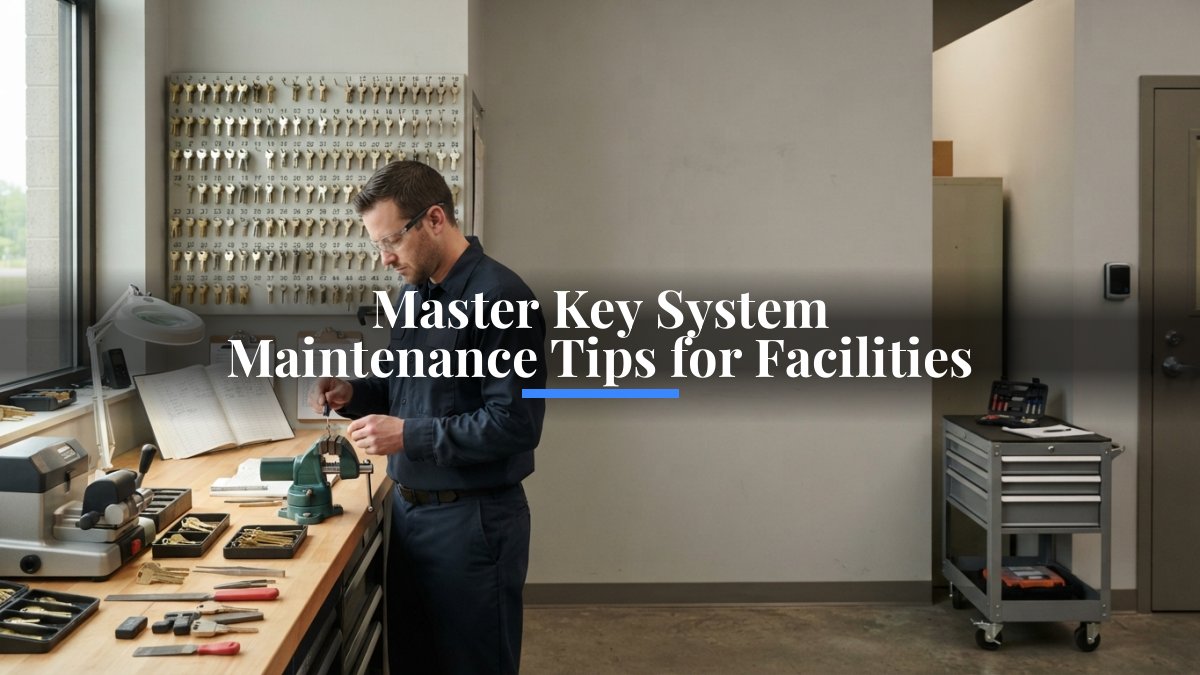
Master key system security
Surveillance and monitoring:
Camera placement and coverage
Recording capability and retention
Blind spots in coverage
Alarm system functionality
Monitoring service responsiveness
False alarm history
Information security:
Computer access controls
Password practices
Sensitive document storage
Employee data handling procedures
Visitor access to sensitive areas
Data backup and recovery procedures
Interior layout and security:
Separation of secure and public areas
Reception area design
Storage of valuable items
Server room or data storage security
Emergency exits and procedures
Lighting in common areas
Staffing and procedures:
Employee security awareness
After-hours procedures
Emergency response plan
Incident reporting procedures
Background check practices for employees
Contractor and vendor access procedures
A comprehensive audit documents findings in each area and recommends improvements, prioritized by risk level and feasibility, with an explanation of why each matters for your situation.
Measurable Outcomes: How to Know If Hiring a Consultant Paid Off
Hiring a security consultant is an investment, and you should be able to measure whether it's paying off. These outcomes matter.
Vulnerabilities identified and addressed: The primary outcome is knowing your security gaps and fixing them.
Reduced security incidents: After implementing recommendations, you should see fewer break-ins, thefts, or unauthorized access attempts. If your office had recurring problems before the assessment, their absence afterward is meaningful.
Improved compliance: If compliance was part of the assessment, you should be able to demonstrate you now meet required standards.
Employee security awareness: A good consultant often recommends employee training and procedures. You should see improved understanding of security practices and better compliance with them.
Faster incident response: If something happens, your office should respond faster and more effectively, with procedures in place, documentation of what happened, and clear next steps.
Peace of mind: Not quantifiable, but real. You understand your vulnerabilities, know what you're protecting and why, and have a plan. That clarity has value.
Cost avoidance: The hardest outcome to measure is the incident that didn't happen because of your improvements, but that's often the biggest return on investment.
Evaluate these outcomes together: did you identify real vulnerabilities, fix them, and actually improve your security posture? If yes, the investment was worthwhile.
At Virginia Security Concepts, we measure success by whether our clients feel more secure and whether their actual security has improved.
For many small offices, that clarity alone justifies the investment.
Virginia Security Concepts conducts thorough security assessments that reveal hidden vulnerabilities specific to your facility. We evaluate physical security, access control, information security, and compliance requirements.
Frequently Asked Questions
What does a security consultant do for a small office?
A security consultant evaluates your facility's vulnerabilities through a detailed assessment, identifies physical security and cybersecurity risks, and recommends specific controls and improvements. They examine access points, surveillance needs, data protection practices, and compliance requirements. Unlike a security guard who provides monitoring or presence, a consultant delivers a strategic roadmap tailored to your business's actual threats and budget.
How much does hiring a security consultant cost for a small business?
Pricing depends on the scope of your assessment, facility size, complexity of your operations, and the consultant's expertise. Rather than guessing, request a detailed quote that outlines what's included in the scope of work and what deliverables you'll receive. Ask about engagement models, some consultants charge hourly, others offer fixed-fee assessments.
When should a small business hire a security consultant?
Hire a consultant if you've experienced a security incident, are unsure whether your current controls are adequate, are opening a new location, have sensitive information or high-value assets, face compliance requirements, or feel your internal IT staff lacks security expertise. You should also consider one if you've never had a professional risk assessment, if your security system is outdated, or if you're expanding and need to reassess your security posture before growth.
Is a security consultant worth it for a small office?
Yes, if you identify specific risks or compliance gaps that could cost far more to remediate after an incident. A consultant provides return on investment by preventing costly breaches, theft, or regulatory fines. They also offer specialized expertise your internal staff may lack. However, if your office has minimal risk exposure, strong existing controls, and no compliance obligations, you may gain less value. The decision hinges on your actual vulnerabilities and the cost-benefit analysis a consultant can provide.
Book Online

Comments