
Residential Lock Rekeying Cost Estimate: 2026 Guide
Updated: Sep 16
Table of Contents
What Goes Into a Residential Lock Rekeying Cost Estimate
Per-Cylinder Labor vs. Total Job Price
Emergency vs. Standard Business Hours
Locksmith Service Call Fee: What It Is and Why It Matters
Rekeying vs. Replacing Locks: Which Option Makes More Sense
Hardware Compatibility Check Before You Decide
Warranty and Insurance Implications
DIY Rekeying Kits vs. Professional Installation
When DIY Works and When It Backfires
Master Key Systems and Smart Lock Rekeying Costs
Residential Security Vulnerability Assessment: The Step Beyond Rekeying
How to Get an Accurate Rekeying Quote
Conclusion
Last Updated: August 25, 2026
Rekeying a home's locks is one of the most cost-effective security decisions a homeowner can make, but the final price depends on variables most guides overlook. The Virginia Security Concepts team has worked through enough residential security assessments to know that homeowners routinely overpay based on incomplete information about what a lock rekeying cost estimate includes. Below, this guide breaks down every component of that estimate, from per-cylinder labor to emergency surcharges, so you can walk into any locksmith conversation knowing exactly what you're paying for and why.
The core insight most cost guides miss: the service call fee and the per-cylinder rekeying charge are two separate line items, and conflating them is the single biggest source of "the quote seemed low but the bill was high" complaints.
What Goes Into a Residential Lock Rekeying Cost Estimate
A lock rekeying cost estimate is a sum of at least three distinct charges: the service call fee, per-cylinder labor, and any hardware or key duplication costs. Knowing each component lets you compare quotes accurately across providers.
The rekeying process involves disassembling the lock cylinder, replacing the key pins inside the pin tumbler mechanism, and reassembling the plug and housing to match a new key. The locksmith technician does not replace the lock hardware, only the internal configuration changes. That distinction is why rekeying consistently costs less than full lock replacement.
Per-Cylinder Labor vs. Total Job Price
Per-cylinder labor is the charge for rekeying a single lock cylinder. A standard residential deadbolt has one cylinder; a double-cylinder deadbolt has two. Most homes have between three and six entry points requiring attention: front door deadbolt, front door knob or lever, back door, garage entry, and possibly a side door (the CDC).
The total job price equals the service call fee plus the per-cylinder charge multiplied by the number of cylinders. A provider quoting a low per-cylinder rate may carry a higher service call fee, making the total comparable to a competitor with a higher per-cylinder rate and a lower call fee. Always ask for both figures before agreeing to a quote.
Cost Component | What It Covers | Notes |
Service call fee | Technician travel and dispatch | Charged once per visit |
Per-cylinder labor | Rekeying one lock cylinder | Multiplied by cylinder count |
Key duplication | Additional key copies | Per key, varies by keyway |
Hardware (if needed) | New pins, springs, or plug | Usually included in labor |
Emergency surcharge | After-hours or urgent response | Added to all above |
Emergency vs. Standard Business Hours
Emergency lock rekeying, typically defined as service outside standard business hours or same-day response, carries an after-hours surcharge on top of standard rates. Standard business hours service is the most cost-effective option when timing allows. If you've just moved into a new home or had a key go missing, scheduling a next-day appointment rather than requesting immediate response can reduce the total bill. Certain situations genuinely warrant emergency response: a recent break-in attempt, a domestic situation requiring immediate key control, or a confirmed unauthorized key copy in circulation.
Locksmith Service Call Fee: What It Is and Why It Matters
The service call fee is the charge a locksmith technician applies to arrive at your property, regardless of the work performed. This fee is non-negotiable in most cases and is charged even if the job takes only fifteen minutes.
The practical implication: if you have any doubt about whether additional locks need attention, rekey them all in one visit. Adding a cylinder during an active service call costs only the per-cylinder labor rate. Scheduling a return visit means paying the call fee again.
According to Angi's residential locksmith cost guide, service call fees are a standard component of locksmith pricing across the industry. Confirm the exact amount before booking, and ask whether it is waived or credited toward the total if you proceed with the work.
Pro Tip Ask every locksmith for a line-item quote that separates the service call fee from per-cylinder labor. Any provider unwilling to break down the estimate is worth avoiding.
Rekeying vs. Replacing Locks: Which Option Makes More Sense
Rekeying is the right choice when the lock hardware itself is in good condition and the only security concern is key control. Lock replacement makes sense when the hardware is damaged, worn, or incompatible with a desired upgrade, such as moving to a higher-security keyway or installing a smart lock.

The cost difference is significant. Rekeying changes only the key pins and springs inside the existing cylinder; the lock hardware stays in place. Replacing a lock means purchasing new hardware plus paying installation labor. For most homeowners dealing with a move, a lost key, or a change in occupancy, rekeying delivers the same security outcome at a fraction of the cost.
Lock replacement wins when the existing deadbolt or knob lock is low-security grade, when the lock housing shows physical damage, or when the homeowner wants to consolidate to a single keyway across all entry points using new hardware.
Hardware Compatibility Check Before You Decide
Not every lock can be rekeyed to match every key. Before committing to either option, a locksmith technician should verify the keyway of the existing lock and confirm whether rekeying to a desired key profile is feasible.
Older locks may use discontinued keyways, making it difficult to source matching key blanks. Locks from different manufacturers rarely share keyways; a Schlage cylinder and a Kwikset cylinder operate on entirely different key profiles and cannot be rekeyed to the same key without replacing one or both cylinders. A hardware compatibility check takes a few minutes and prevents paying for rekeying only to discover the locks cannot be made to work on a single key.
Warranty and Insurance Implications
Rekeying a lock does not void the manufacturer's mechanical warranty in most cases, because the process uses factory-specified key pins and does not alter the lock's structural components. However, some lock manufacturers specify that only authorized service providers may perform warranty work. Checking the warranty terms before proceeding is worth the few minutes it takes.
From an insurance perspective, some homeowners' policies include provisions related to key control and lock security following a change in occupancy. As noted in Insurance Information Institute guidance on home security, documenting security improvements, including professional rekeying, can support claims related to unauthorized entry.
DIY Rekeying Kits vs. Professional Installation
The Kwikset SmartKey Security Re-Keying Kit allows homeowners to rekey compatible Kwikset locks in seconds using an existing working key, without removing the lock from the door. The Schlage 40-134 Rekeying Pin Kit is a more comprehensive tool set designed for locksmiths and experienced DIYers working with Schlage pin tumbler locks.
The Kwikset SmartKey kit retails for roughly $12-$15 at hardware stores and is genuinely simple to use. The Schlage kit ranges from approximately $24 to over $100 depending on completeness and retailer, and requires a working understanding of pin tumbler lock mechanics.
DIY rekeying is viable in a narrow set of circumstances and is not a universal substitute for professional service.
When DIY Works and When It Backfires
DIY rekeying works when the homeowner has Kwikset SmartKey compatible locks, a working key is available to initiate the process, and the goal is simply to invalidate a lost or distributed key.
It backfires when the lock is not SmartKey compatible, no working key is available, the homeowner is unfamiliar with pin tumbler mechanics, or multiple different lock brands need to be rekeyed to a single key. A botched DIY rekey can leave a lock inoperable, requiring a locksmith call anyway. At that point, the cost of the kit is wasted on top of the professional service fee.
Watch Out Attempting to rekey a lock without the correct tools or a working key can permanently damage the cylinder, requiring full lock replacement. The cost of a replacement deadbolt plus installation labor far exceeds the cost of professional rekeying from the start.
Master Key Systems and Smart Lock Rekeying Costs
Master key systems introduce complexity that standard per-cylinder pricing does not capture. A master key system allows a single master key to operate multiple locks while each lock retains its own individual change key. This requires the installation of master wafers inside each cylinder alongside the standard key pins.
The cost depends on the number of cylinders, the complexity of the key hierarchy, and whether existing hardware is compatible with master keying. Residential applications are less common than commercial ones, but homeowners managing multi-unit properties, guest houses, or properties with shared access points have legitimate reasons to consider a master key configuration.
Smart lock rekeying is a different category entirely. Many smart locks do not use traditional pin tumbler cylinders, so conventional rekeying does not apply. Instead, access management happens through code changes, app-based credential updates, or Z-Wave and Bluetooth pairing resets. Some smart locks include a physical key cylinder as a backup, and that cylinder can be rekeyed using standard methods. Confirm with the manufacturer whether the specific model supports physical cylinder rekeying before scheduling a locksmith visit.
Residential Security Vulnerability Assessment: The Step Beyond Rekeying
Rekeying addresses key control. It does not address door frame integrity, strike plate depth, hinge security, or the overall security grade of the lock hardware itself. A residential security vulnerability assessment examines all of these factors together.
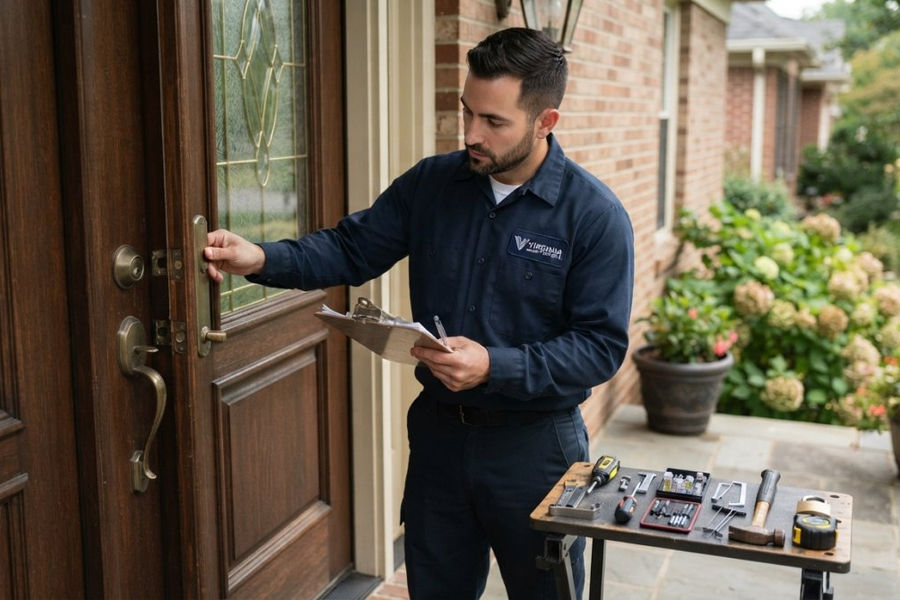
A thorough assessment identifies entry points where a forced entry attempt would succeed despite properly rekeyed locks. Common findings include shallow strike plates secured with short screws, single-cylinder deadbolts on glass-panel doors, and sliding door mechanisms with inadequate secondary locks.
Virginia Security Concepts conducts residential security vulnerability assessments as a distinct service from locksmith work. The assessment examines each entry point, evaluates the security grade of installed hardware, and identifies hidden vulnerabilities that rekeying alone cannot address. The goal is not to generate a list of expensive upgrades but to give the homeowner an accurate picture of where their property's actual risk lies.
The practical difference between a rekeying visit and a security assessment is the scope of questions being answered. Rekeying answers: "Who has a working key?" A security assessment answers: "How hard is it to get in without one?"
Key Takeaway Rekeying is a necessary first step after any change in occupancy or key distribution. A security vulnerability assessment is the follow-up that tells you whether rekeying was sufficient or whether the entry points themselves need attention.
How to Get an Accurate Rekeying Quote
Getting an accurate residential lock rekeying cost estimate requires asking the right questions before any technician arrives. Here is a practical checklist:
Count the number of entry doors and confirm whether each has a deadbolt, a knob or lever lock, or both.
Identify the lock brand on each door (check the face of the cylinder or the lock body for a manufacturer name or logo).
Note whether any locks are smart locks with physical key backup cylinders.
Determine whether all locks need to be rekeyed to a single key or whether separate keys per door are acceptable.
Ask each provider to quote the service call fee and per-cylinder labor rate separately.
Confirm whether key duplication is included or priced separately.
Ask whether an after-hours or emergency surcharge applies to your requested time.
Request a written estimate before authorizing any work.
The most reliable quotes come from licensed, bonded, and insured locksmiths who provide upfront pricing before beginning work. Providers who quote only a total price without breaking it into components make it difficult to verify that the charges are accurate.
Getting a reliable lock rekeying cost estimate means separating the service call fee from per-cylinder labor, confirming hardware compatibility before committing to a path, and understanding what rekeying does and does not solve. Virginia Security Concepts goes beyond the cylinder: our residential security vulnerability assessments identify hidden entry-point weaknesses that rekeying alone leaves unaddressed, using the same technical precision and consultative approach we bring to commercial and institutional security surveys. Book online with Virginia Security Concepts to get a clear, honest picture of your property's security from professionals who won't recommend work you don't need.
Frequently Asked Questions
Is it cheaper to rekey locks or replace them entirely?
Rekeying is almost always the more affordable option. Because the existing lock hardware stays in place and only the internal key pins are reconfigured, the labor involved is minimal compared to a full lock replacement. Replacement makes financial sense when the lock cylinder is worn, the hardware is outdated, or you want a security upgrade to a higher-grade deadbolt or smart lock. A locksmith technician can inspect your current hardware and tell you whether rekeying is viable before any work begins.
What factors influence the total cost of a residential rekeying service?
Several variables affect your final lock rekeying cost estimate: the number of lock cylinders being rekeyed, the keyway and brand of your existing hardware, whether you need after-hours or emergency service (which typically carries a surcharge), and the locksmith service call fee charged just to dispatch a technician. Properties with high-security cylinders, master key systems, or smart locks that require reprogramming will generally cost more than a straightforward standard deadbolt rekey.
Can I rekey my own locks to save money?
DIY rekeying is possible for homeowners with Kwikset SmartKey-compatible locks, which use a simple tool-based process requiring no disassembly. Standard pin tumbler locks require a rekeying kit, a plug follower, and familiarity with key pins and springs inside the lock mechanism. Mistakes can damage the plug or housing and leave you locked out. For most homeowners with multiple entry points or mixed hardware brands, professional installation is more reliable and avoids the risk of compromising lock integrity.
Does rekeying a lock compromise its security?
Rekeying does not weaken a lock when done correctly. A skilled locksmith technician replaces the key pins inside the cylinder so only the new key operates it, leaving the lock mechanism, housing, and deadbolt hardware untouched. In fact, rekeying after a move or after losing a key improves key control by voiding access for any previously cut copies. The only scenario where security suffers is improper DIY rekeying that leaves pins misaligned or springs incorrectly seated.
How long does it take a professional to rekey a residential lock?
A residential locksmith typically rekeying standard deadbolts and entry knobs spends roughly 10 to 20 minutes per lock cylinder, depending on the keyway and hardware brand. A home with three or four entry points is usually completed within an hour, including the service call arrival and key duplication. Smart locks or high-security cylinders that require additional reprogramming or specialized tools may add time. Getting a price estimate upfront also helps confirm scope before the technician begins.
Book Online
This article was written using GrandRanker

Comments